Protection against bullets as tested to glass standard EN 1063 for Classes BR1 to BR7 (S/NS) + SG1/SG2 (S/NS) specific to shotguns and the system standard EN 1522 and EN 1523 for Classes FB1 to FB7 (S/NS).
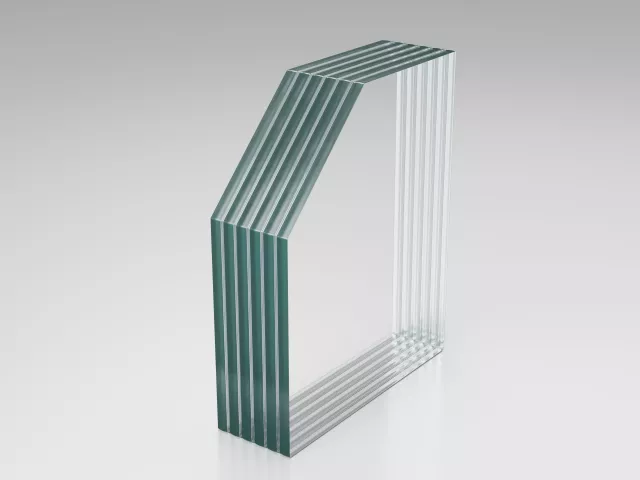
When standard glass is impacted by a bullet’s force, it breaks into pieces and leaves openings defenceless against subsequent shots. Don’t take this risk. The use of high-security bullet resistant glass ensures reliable protection by preventing ammunition from entering protected spaces.
Bullet resistant glass levels in Classes BR1 to BR7 and SG2 is tested to European standard EN 1063 by successively shooting three different glass specimens with three controlled shots fired in a 120mm triangle, or one shot at the centre of the glass for Class SG1. For all classes, glass is tested as part of a system (glass + frame + environment) in accordance with EN 1523 (FB1 to FB7 + FSG).
This stringent test process affords buildings with heightened security, while reducing the sense of vulnerability building occupants may have behind transparent building elements.
Did you know?
A bullet from a Kalashnikov AK-47 can impact a surface at speeds of up to 2,500 km/h? High-performance, bullet resistant glass is designed to withstand such impacts in accordance with the classification to which it is tested.
Discover the importance of bulletproof glass in high-risk environments. Learn how it enhances security, resists impact and ensures safety in critical areas.
Discover key factors for selecting bulletproof glass for hotels. Ensure guest safety with the right security glazing for enhanced protection and peace of mind.
Explore bullet-resistant glass standards, applications, and benefits for government buildings across the Middle East, focusing on certified ballistic protection and secure design.
Protect against blasts, as tested to the glass standard EN 13541 for resistance classes ER1 through ER4 (S/NS) and system standard EN 13123-1 and 13123-2.
Protection against manual attack, as tested to the glass standard EN 356 to achieve Classes P6B to P8B and the system standard EN 1627 for Classes RC1 to RC6.