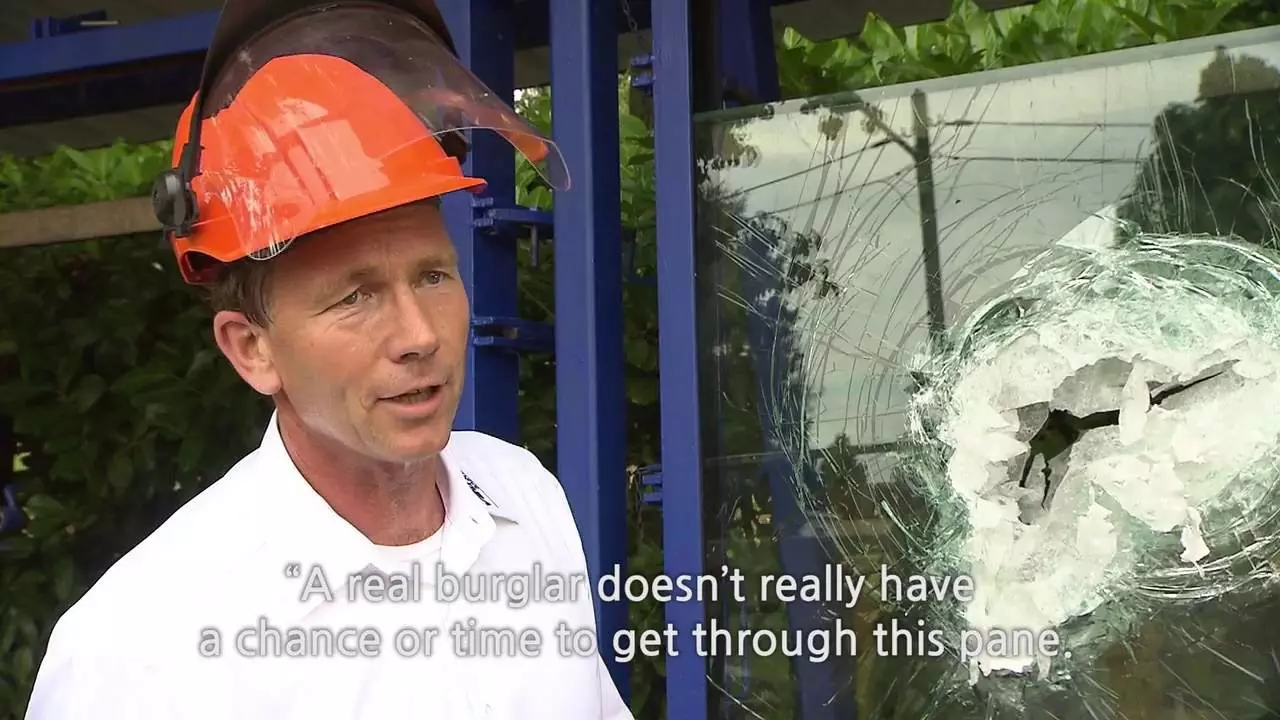
The European standard EN 356 defines the resistance of attack-resistant glass to manual attacks, such as burglary, vandalism, or forced entry. Often referred to as attack glass or anti bandit glass or burglar proof glass, these high-security glazing solutions are specifically designed to delay or prevent unauthorized access and protect building occupants.
The standard classifies the level of protection offered by different types of attack resistant glass, ranging from P1A to P8B, with P1A being the lowest level of resistance and P8B the highest. Classification is based on the number of impacts and the energy level applied during testing.
High-security glass such as p6b glass, p7b glass, and p8b glass provides the highest levels of protection. These burglar proof safe glass solutions are considered among the most effective options for protection against forced entry, even when heavy tools such as hammers, chisels, or axes are used. This type of anti vandal glass is engineered to resist repeated impacts and withstand prolonged attack attempts.
The European standards EN 1627, EN 1628, EN 1629, and EN 1630 define the resistance of windows, doors, and curtain wall systems to manual attack. In addition to the type of tools used, these standards introduce the concept of resistance duration for the entire system. Resistance classes range from RC1, the lowest level of protection, to RC6, the highest level within the classification.